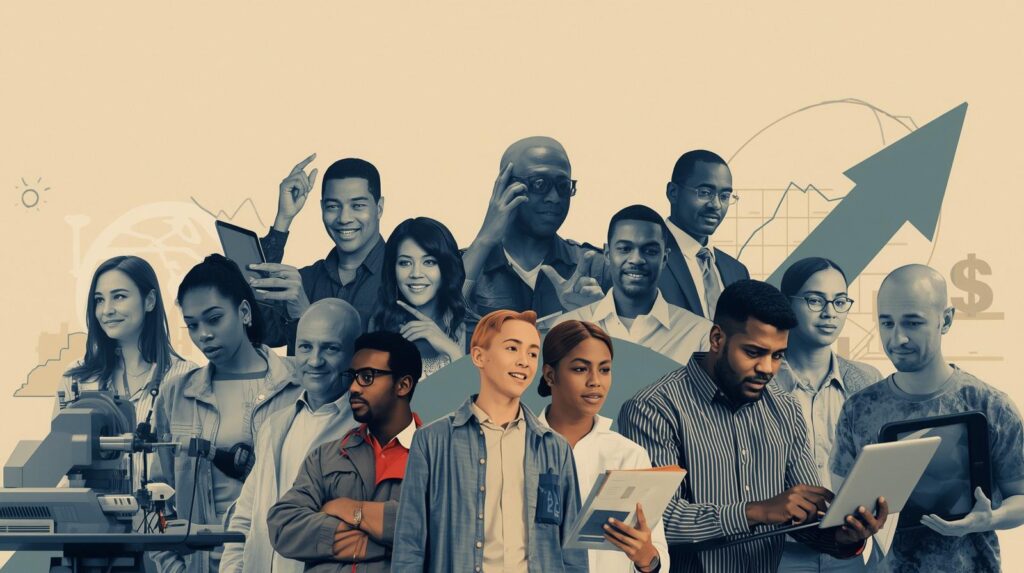



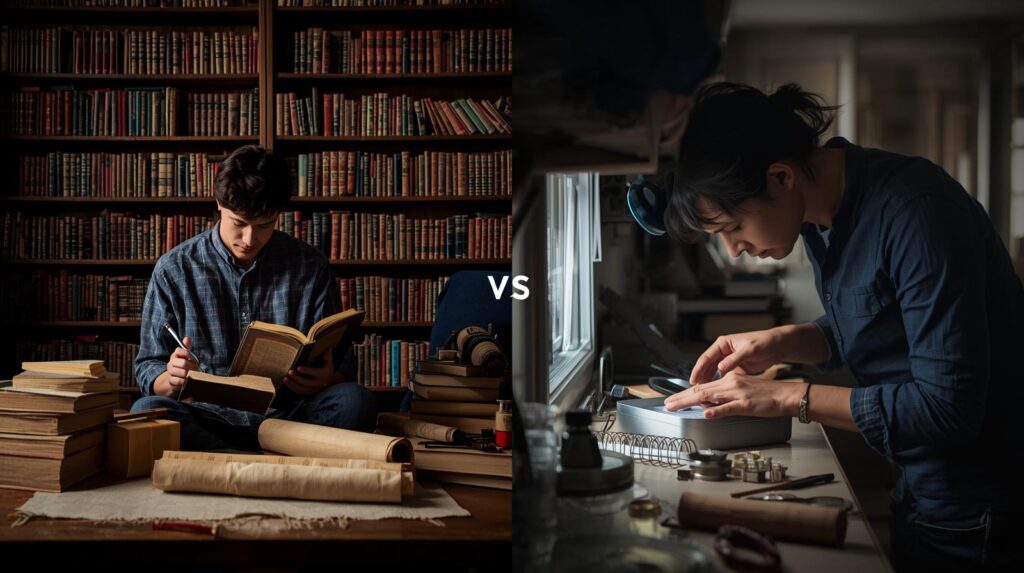
Nowadays, a typical scene occurs in many homes. A student struggles to find a suitable employment even after graduating with outstanding grades and a recognized degree. Simultaneously, someone with practical skills—sometimes even without a traditional degree—gets hired and advances in their profession more swiftly. This gap begs the crucial issue, “If education is so important, why does it not always guarantee employment?”
The cause is the increasing confusion that exists between skill development and education. Although many people believe they are the same, they actually have different functions. While education imparts knowledge and comprehension, skill development concentrates on using that knowledge in practical settings. This distinction is more important than ever in the rapidly evolving work market of today.
This blog’s goal is to provide a clear, understandable explanation of the distinction between education and skill development. By the end, readers will comprehend the significance of both and how striking a balance between them promotes long-term success. By fusing education with useful, employable skills, modern learning platforms like SkillsBiz Education are crucial in closing this gap.
What Is Education? (Explained Simply)
In its most basic form, education is the process of acquiring understanding, values, and knowledge. It typically starts in school, continues in college or university, and frequently yields degrees or certificates. Education helps people comprehend how the world functions by teaching them disciplines like physics, arithmetic, economics, history, and languages.
Academic learning is the main focus of traditional educational systems. Learners study textbooks, attend classes, adhere to a set curriculum, and take tests. This framework fosters critical thinking, discipline, and general awareness while assisting in the development of a solid theoretical foundation. People’s communication, reasoning, and thought processes are influenced by their education.
Education is important for personal growth in addition to employment. It increases self-assurance, moral awareness, and social consciousness. An educated individual is more likely to make wise choices and make constructive contributions to society. Even if education increases information, it doesn’t necessarily teach how to use that knowledge in real-world, work-related contexts.
What Is Skill Development?
Learning how to perform something well is the main goal of skill development. It is about developing skills that are immediately applicable in professional or real-world contexts. Skill development includes, for instance, learning how to code, create a website, successfully engage with clients, analyze data, or lead a team.
Technical skills include accounting and programming; soft skills include leadership and communication; digital skills include using tools and platforms; and professional skills are associated with particular industries. Skill development is very practical and outcome-focused, in contrast to traditional schooling.
Employability and skill development are closely related because businesses need someone who can complete tasks, solve issues, and provide value right away. By emphasizing the development of industry-relevant skills, platforms such as SkillsBiz Education help students become more than just degree holders.

Core Purpose: Learning vs Doing
Learning versus doing is the fundamental distinction between education and skill development. Understanding theories, concepts, and ideas is the main goal of education. The application of those concepts in practical settings is the main goal of skill development.
Being able to operate and maintain a machine is a skill; understanding how it operates is education. Developing and managing a good campaign is a talent; learning about marketing methods is education. This distinction is evident in both everyday life and the workplace.
Many people are aware of what needs to be done, yet they find it difficult to carry it out. This disconnect between information and action emphasizes the importance of skill development in addition to education.
Difference Between Education and Skill Development in Approach
A classroom-based approach is typically used in education, where students listen, read, and write tests while teachers explain concepts. Certificates, grades, and marks are the main focus. The curriculum is frequently set in stone and evolves gradually over time.
On the other hand, skill development depends on practice. It places a strong emphasis on practical instruction, projects, results, and performance. Students are assessed on their abilities rather than their grades. The curriculum is adaptable and revised frequently to reflect the demands of the industry.
Furthermore, skill development is mentor- and practice-oriented, whereas education is frequently teacher-led. Students actively engage, try new things, make errors, and get better. This pragmatic approach increases the relevance of skills in practical settings.
Role of Education in Building a Foundation
Despite its drawbacks, education is essential for laying a solid foundation. It enhances general knowledge, logical reasoning, basic literacy, and numeracy. People learn how to learn, analyze information, and think critically through education.
To create disciplined, knowledgeable people, basic education is crucial. It raises awareness of ethics, culture, and society. Without education, skill growth could be shallow and incomprehensible.
But in today’s workforce, education might not be sufficient on its own. Although it lays the groundwork, further abilities are required to convert knowledge into productive labor. This is where traditional education is enhanced by platforms such as SkillsBiz Education.

Role of Skill Development in Career Readiness
Developing one’s skills directly contributes to one’s career readiness. It focuses on actual job requirements and industry standards. Competent people are able to adjust fast, take on tasks with assurance, and work effectively.
Learners get an understanding of professional needs through real-world simulations, practical projects, and industry experience. By transforming theoretical knowledge into practical ability, skill development serves as a link between education and employment.
Education vs Skill Development in Today’s Job Market
Employers today seek out individuals that can handle problems, are flexible, and perform well. Degrees are still respected, although they are frequently regarded as necessities rather than assurances.
Because skills increase production and cut down on training time, many businesses place a high priority on them. Even if a candidate has an average academic background, hiring trends are increasingly favoring those who show practical ability.
Employees are expected to constantly learn and adapt in today’s businesses. This change emphasizes how important skill development is becoming in addition to formal schooling.
Impact on Employment and Income
Long-term growth is influenced by education since it provides access to more advanced coursework and a wider range of professional options. Conversely, skills have an immediate impact on income levels and employability.
Professionals with in-demand talents frequently land higher-paying positions more quickly. Salaries rise and job positions become more specialized as skill levels rise. However, combining schooling with ongoing skill development leads to the greatest sustained advancement.
Balancing both ensures stability, growth, and resilience in changing economic conditions.

Education and Skill Development: Not Opposites but Complements
The development of skills and education are complementary rather than antagonistic. While skills give the “how,” education provides the “why” behind actions.
When combined, they produce professionals who are well-rounded and capable of applying concepts. Blended learning models that combine theory and practice are very beneficial to modern learners.
SkillsBiz Education follows this integrated approach, ensuring learners gain both knowledge and practical expertise.
Role of Online Learning and EdTech Platforms
The way people learn has been completely changed by digital schooling. Flexibility, affordability, and access to high-quality education from any location are all provided by online platforms.
EdTech platforms provide real-world projects, industry-aligned courses, and ongoing updates to close the gap between education and skill development.
Common Misunderstandings About Education and Skills
The idea that a degree ensures employment is a common misconception. In actuality, abilities guarantee employment while degrees open doors. Another myth is that education is not necessary to acquire abilities. The development of skills lacks focus and depth in the absence of a foundational education.
By clearing up these misconceptions, students are better able to choose their educational routes.
How Students and Professionals Can Balance Both
Students should focus on education while gradually building skills alongside their studies. Professionals should continuously upgrade skills to stay relevant.
Learning is no longer limited to a certain age or stage. Continuous learning ensures adaptability and long-term success.

Real-Life Examples: Education + Skills in Action
Imagine a graduate who obtains employment more quickly than their classmates by learning industry tools in addition to their academic coursework. These examples demonstrate how occupations are transformed when education and talents are combined.
Professionals with both knowledge and skills are beneficial to industries on a larger scale, promoting innovation and growth.
The Future of Learning: Education Meets Skill Development
Integration is the key to the future of education. Lifelong learning becomes crucial as technology advances. To educate students for future employment, skill platforms and educational institutions must collaborate.
Both education and skill development are essential for both professional and personal development. While skills generate possibilities, education lays the groundwork.
Learners can attain long-term success and flexibility by combining the two. This well-rounded strategy is supported by SkillsBiz Education, which enables people to pursue fulfilling occupations and make valuable contributions to society.
FAQs
1. What is the main difference between education and skill development?
Education focuses on knowledge and understanding, while skill development focuses on applying that knowledge in practical situations.
2. Is skill development more important than education?
Both are important. Education builds the foundation, and skill development ensures employability and career growth.
3. Can skills replace formal education?
Skills can enhance careers, but basic education is essential for long-term understanding and adaptability.
4. Why do companies prefer skilled candidates?
Skilled candidates can perform tasks efficiently, adapt quickly, and add value from the start.
5. How can students develop skills while studying?
Students can enroll in online courses, work on projects, and gain practical exposure alongside academics.
6. How does SkillsBiz Education help learners?
SkillsBiz Education combines education with practical, industry-relevant skill training to prepare learners for real-world careers.