




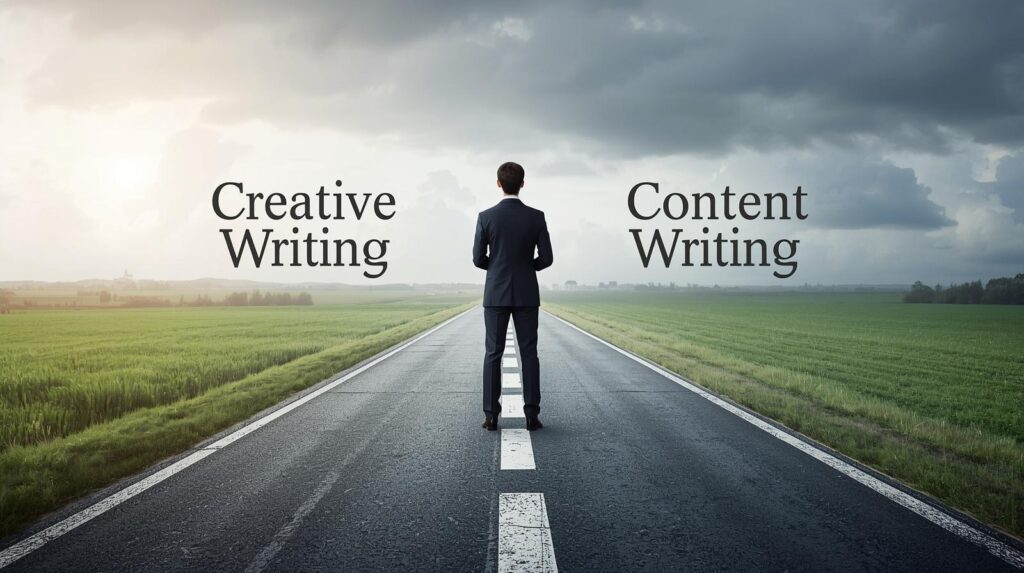
As the digital economy continues to evolve rapidly due to the changing nature of attention as a currency, the existence of social media platforms and other channels of communication that impact nearly every industry, writing has become an integral part of people’s daily lives. Writing serves as a powerful means of storytelling or creativity for creating content that impacts consumer behavior and influences business. Therefore, as most writers will attest, structured education provides the foundation for developing professional writing skills.
Creative writing and content writing are both specialized areas of language-based training, yet they are very distinct in terms of style, objective and long-term career opportunities. For those interested in pursuing either career, it is vital that they evaluate the long-term economic and employability effects of each course. You will also learn about the benefits of each course, the skill sets you will acquire from each program and how these courses will give you the tools to compete in today’s highly competitive job market.
Understanding the Role of Writing in the Modern Economy
For the current economy to continue growing, it relies heavily on both user interaction through communication, creativity, and user engagement as well as the way companies and organizations promote themselves. In addition to selling products, many businesses compete with one another in their ability to tell stories about their brands through blogs, social media posts, newsletters, advertising, and digital experiences. With many brands focusing on creating an online presence and connecting with customers, there is now an increasing demand for skilled writers.
Creative Writing is the foundation of many industries, such as film and television production, publishing, advertising, video gaming, AR VR (Augmented Reality and Virtual Reality), and so forth. Furthermore, Creative Writing has become a means of supporting Business Growth through digital marketing strategies and effective communication strategies as well as through the production of data-driven content and Educational Content.
Creative Writing and Content Writing offer unique opportunities for students to develop skills that will benefit them professionally in many different ways within the economy.
Creative Writing Course: Benefits and Skills You Gain
The art of Creative Writing involves producing engaging, entertaining, and inspiring written content for people to read as stories. You can write whatever you want—create an entire world out of nothing, or write from the hearts of real people to evoke emotions in the reader—but no matter how you write it, this course will improve your artistic ability as a writer.
The Creative Writing course offers several key benefits:
1. Strong Narrative Building Skills
You will learn to build a plot and create characters and then connect these three elements together through an engaging narrative structure. This skill will help you write novels, screenplays, tell stories or develop creative campaigns for your brand.
2. Increased Imagination and Innovation
The ability to think outside the box, as well as being able to think creatively, will increase as you grow as a Creative Writer. Thinking creatively is important for all sectors of film, advertising, game development, and entrepreneurship.
3. Enhanced Emotional Intelligence and Expression
You will learn how to effectively express your feelings and convey the emotional states, or psychology, of your audience. Writers often hold positions that require knowledge of emotional intelligence and expression.
4. Develop Confidence Creating Original Content
As a Creative Writer, you will be taught how to create a “unique voice” because this will help you create books, blogs, or screenplays. The Creative Writing course will teach you how to develop the unique expression of who you are in your writing.
You will learn the following skills through the Creative Writing course:
- How to create a plot with a story structure.
- Create and develop characters.
- How to write with figurative language techniques.
- Write dialogue that flows with the story.
- Understand tone, pacing, and narrative flow of a story.
- Brainstorm creatively and develop a long-range creative vision.
These skills are not limited to those in the artistic field and can add significant value to many business positions that require Storytelling to define Brand Identity, Leadership Communication, and Marketing Strategy.
Real-world applications
Creative writing is utilized across multiple industries, including:
- Publishing
- Television and Film
- Digital Entertainment
- Advertising Agencies
- Game Development
- Branding and Communications
- Podcasts and audio storytelling services
The economic significance of creative writers is obvious; they generate billions of dollars each year for industries that provide media, entertainment, and digital marketing services worldwide.
Content Writing Course: Benefits and Skills You Gain
The backbone of modern communications is content writing, which embodies all forms of writing—structured, practical, and direct. The content writing course you are considering offers a wide range of material written for a variety of purposes such as informing, educating, or persuading customers (readers).
The following are some key advantages associated with taking a content writing course:
1. Professional business writing skills
You will learn how to create blogs, articles, website content, landing page copy, email marketing copy, product descriptions, and more.
2. Integration of SEO with digital marketing
With content writing, it is important to place your content higher on search engines so that you are able to connect with customers via digital marketing. The course included in your course teaches readers the fundamentals of keyword usage and search trends.
3. Increased Employment Factors in many Backgrounds
While many content writers have backgrounds in advertising or journalism, there are content writing jobs in every sector from the IT industry to e-commerce companies and many others.
4. Real-time Learning and Results
Content writing is one of the few areas of web content creation that generates leads, produces website traffic, builds brand authority, and represents an essential part of the economy.
Skills gained through Content Writing
- Keyword Research and Search Engine Optimisation
- Business Communication
- Creation of Blogs and Articles
- Research-Based Writing
- Analytical and Technical Writing
- Adaptation of Tone for Different Target Audiences
- Content Structure and Readability Improvement
- Editing and Proofreading
These Skills Are Highly Beneficial to Job Seekers and People Transitioning to Digital Roles Immediately Upon Entering Their Careers.
Real-world applications
Content Writing will Be Employed in Different Industries, Such as:
- Digital Marketing Agencies
- IT and Software Providers
- E Commerce Sites
- Media and Journalism
- Educational Technology Companies
- Real Estate Agencies
- Financial and Investment Companies
- Health & Wellness Agencies
- Startup and Corporate Communications Teams
With the increasing importance of information and engagement online, content writing is a promising career choice with a very rapidly expanding market.
Where SkillsBiz Education Fits in

SkillsBiz Education’s instructional programs offer organized sections, actual project assignments, and an approach to creative and content writing education based on what employers want. The blog’s primary topic is not SkillsBiz Education, yet the institution is used in this blog as an illustration of how organized instructional settings can close the gap between inherent abilities of an individual and the expectation of that individual by employers.
The students who pursue these types of courses acquire an understanding of their particular style of writing, the writing market’s requirements, and the generally accepted standards within the professional arena which increases the student’s level of confidence when he or she enters the workforce, thus making them more employable.
Choosing Between Creative Writing and Content Writing: Which Is Right for You?
There is a fundamental point of intersection between the two fields of study, that of effective communication. The path one will take will depend on what type of career is being pursued. It will be based on ones interest, personal strengths and weaknesses.
Select Creative Writing if you:
- Have a passion for creative writing and see yourself as a storyteller.
- Plan on a career in Media, Literature, Entertainment, Branding.
- Prefer writing which has an emotional impact over writing which follows an established format.
- Want to write screenplays, fiction, poetry and commercially driven creative campaigns.
Select Content Writing if You:
- Want stability with a high demand career in most industries.
- Prefer writing that is based on research/information and has an informative/practical nature.
- Are interested in Digital Marketing including the development of SEO content and Brand Communication.
- Enjoy creating Blogs, Website Content, Product Descriptions, and Marketing Copies.
In addition to the above, both Creative and Content Writing courses will:
- Allow you to develop strong communication skills.
- Allow you to have an improved Professional Presence.
- Enhance your Resume.
- Allow for many opportunities to work as a Freelance or Remote Writer.
- Allow for a long term Writing Discipline.
- Help you to successfully navigate the complexities of the Digital Economy.
Both Creative and Content Writing specializations aid in the creation of Economic Value (via creativity) or communicate to foster Growth (via communication) in Business.
The Economic Relevance of Writing Skills Today
Writing plays an important role in influencing consumer choices, visibility of brands, the experience users have with those brands and their overall economic productivity in a digital-first society. Digital adoption rates across countries like India demonstrates this reliance on content creation as an enabler of e-commerce growth, innovative technologies, education and outsourcing globally.
Creative writing supports the creativity and exportation of material for businesses. This stimulates culture and provides value within an economy. Content writing builds infrastructure around companies to allow brands the ability to compete at an international level and connect with their target audiences while building digital authority.
Both creative writing and content writing generate significant economic contributions, making writing courses a cost-effective option for those looking to develop future-focused competencies.
Frequently Asked Questions
1. The Difference Between Creative Writing and Content Writing for Career Opportunities
There are many similarities between Creative Writing and Content Writing in terms of employment potential. However, the overall demand for Content Writers is higher than that of Creative Writers in most industries. Creative Writing allows an individual to express themselves artistically, and Creative Writers typically find jobs in small niche markets.
2. Taking Both Courses to Enhance the Range of Your Writing Skills
Yes. Professionals who write content also need to be creative. By taking both courses, you will ensure that you develop both your creative and business writing abilities.
3. Are Writing Skills Still Important in the Future of AI?
Yes. While AI can enhance the quality of writing, nothing can replace humans’ ability to create, use emotion, think of original ideas, or implement a strategic approach.
4. Which Industries Hire Creative Writers?
Creative writers can be found in a variety of different industries. Most Creative Writers work in industries such as Entertainment, Film, Publishing, Advertising, Video Game Development, Audio Storytelling, and Brand Management, among others.
5. Which Industries Hire Content Writers?
Many companies in a variety of industries, including Information Technology, Marketing Agencies, E-commerce, Financial Institutions, Educational Institutions, Real Estate, Media, Health Care, and Corporate Communications, frequently employ Content Writers for their websites and marketing materials.