



Today’s economy is quite different from what it was several decades ago. In the past, it was often sufficient to have a degree or a certain job title to establish a stable career. Today, though, the focus has changed direction. Employers, sectors, and even state authorities are increasingly focusing on individuals’ actual capabilities rather than their years-old educational backgrounds. In the current economy, skills have emerged as the true currency.
Practical skills now affect employability, income levels, and long-term economic stability. People with the right expertise discover superior job prospects; companies with proficient teams develop at an accelerated rate; and countries with skilled labor forces cultivate more robust economies. This blog aims to clarify the importance of skills in today’s economy and the vital contribution of skill-based learning, backed by platforms such as SkillsBiz Education, to economic strength.
Understanding Today’s Economy in Simple Terms
The economy of today is rapidly evolving, competitive, and heavily shaped by technology. Businesses and work practices have evolved due to new tools, digital platforms, and global markets. As jobs evolve, many conventional roles demand new skills.
In this setting, companies rely on individuals who can adjust swiftly, think critically, and resolve issues effectively. Only routine work is no longer rewarded by the economy. Rather, it appreciates persons who can learn on an ongoing basis and utilize their abilities in practical contexts. That is the reason skills are now at the heart of economic advancement.
What Do We Mean by “Skills”?
Skills refer to the hands-on competencies that enable individuals to carry out tasks efficiently. Unlike theoretical knowledge, skills emphasize practical application. To know something is not the same as to be able to apply it confidently in actual situations.
Skills include abilities like problem-solving, effective communication, digital literacy, collaboration in teams, making sound decisions, and adaptability. As an illustration, comprehending business concepts constitutes knowledge, whereas applying that comprehension to enhance processes or handle clients is a skill. In the current economy, skills convert knowledge into tangible value.
Why Skills Matter More Than Ever
Due to the fast-paced evolution of job roles, skills have become indispensable. Due to automation, artificial intelligence, and digital transformation, the demand for repetitive tasks has diminished, while the need for analytical and creative skills has grown. A lot of jobs today necessitate that individuals engage with technology, analyze data, and work together across teams.
Skills enable individuals to maintain their relevance in the workforce. Someone who continually enhances their abilities stays valuable, even as tools and industries evolve. Being able to adapt is one of the key attributes in the economy today.
Skills and Employment Opportunities
Hiring based on skills is increasingly prevalent across various industries. Employers are placing emphasis on candidates’ capabilities over their educational qualifications. Consequently, individuals possessing the appropriate skills tend to secure employment more quickly and benefit from superior career prospects.
With this shift, unemployment is also mitigated. People who cultivate sought-after abilities can adapt to various roles and sectors. An adept workforce fortifies the economy by guaranteeing that businesses can tap into the expertise of competent professionals who can satisfy present needs.
How Skills Improve Individual Earning Potential
Skills directly influence earning potential. Because they contribute more value to organizations, professionals with strong, relevant skills often receive higher salaries. Job security is enhanced by skills, since individuals with skills are less prone to replacement and more capable of adapting to change.
Continuous learning is significant in this context. By investing in the development of their skills, individuals create opportunities for promotions, changes in roles, and improved financial stability. Platforms such as SkillsBiz Education facilitate this journey by aiding learners in developing practical, job-ready skills that contribute to long-term income growth.
Skills and Workforce Productivity
A skilled workforce performs better across all levels of an organization. When employees understand their roles clearly and have the right skills, work becomes more efficient and accurate. Errors reduce, quality improves, and teams collaborate more effectively.
Key benefits of a skilled workforce include:
-
Higher efficiency and accuracy
-
Better problem-solving
-
Improved innovation
-
Stronger teamwork and collaboration
Higher productivity leads to stronger businesses, and strong businesses contribute to a healthier economy overall.
Skills as a Driver of Business Growth
Companies develop more rapidly when their teams possess the appropriate skills. Employees with skills can enhance processes, provide better customer service, and adjust to market changes more readily. When individuals possess the confidence and capability to think differently, innovation becomes feasible.
Customer satisfaction is also supported by skill development. Employees who grasp the systems, tools, and communication provide enhanced experiences. It establishes trust and loyalty, as well as growth in business over the long haul.
The Role of Skill-Based Education in Economic Growth
All over the globe, educational systems are transitioning from models that emphasize theory to approaches centered on skills. This shift matters since economies require professionals who are ready for work, rather than merely degree holders. Education based on skills concentrates on practical understanding and real-life application.
Platforms such as SkillsBiz Education are essential to this transition by providing industry-relevant learning that links education to employment. SkillsBiz Education contributes to economic growth and workforce preparedness by aiding students in developing practical skills.

Skills and Economic Resilience
Jobs and industries can be affected by economic challenges like market slowdowns or technological disruptions. Individuals and organizations with expertise are better prepared to manage these changes. When circumstances shift, they can acquire new skills, change roles, and seek out new opportunities.
Upskilling and reskilling contribute to a more rapid economic recovery. A continuously learning workforce is both productive and innovative, even amidst uncertainty. Such resilience is crucial for the economy to remain stable over the long term.
Closing Skill Gaps in the Economy
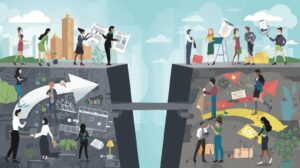
Skill gaps occur when the skills people have do not match what industries need. These gaps slow economic progress, reduce productivity, and limit innovation. Closing skill gaps requires continuous learning and accessible education.
Training programs, upskilling initiatives, and platforms like SkillsBiz Education help bridge these gaps by offering focused, practical learning paths. When skill gaps are reduced, businesses perform better and economies grow stronger.
Lifelong Learning in a Skills-Driven Economy
In an economy driven by skills, education continues beyond graduation. With careers now encompassing various roles and industries, ongoing education has become crucial. Continuous learning aids in maintaining individuals’ confidence, adaptability, and employability.
Professionals can easily adapt to career changes and maintain their relevance throughout their working lives by committing to continuous skill development via platforms like SkillsBiz Education.
The Long-Term Impact of Skills on Economic Strength
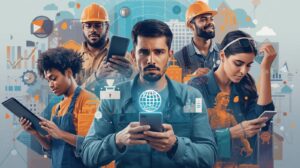
Economic growth that is sustainable is driven by a skilled population. When individuals are employable, productive, and adaptable, unemployment rates decline and income levels rise. Economies with skilled workforces increase their global competitiveness.
Investing in skills fosters a growth cycle: capable individuals create robust businesses, and these businesses bolster the economy. Therefore, learning based on skills constitutes not only a personal investment, but also a national priority.
Today’s economy rests on skills. They affect careers, the performance of businesses, and national development. With the ongoing evolution of industries, skills will be the primary determinant of success and stability.
Individuals and organizations can confidently prepare for the future by concentrating on skill development and utilizing platforms such as SkillsBiz Education. To invest in skills is to invest in economic power.
FAQs
Why are skills important in today’s economy?
Skills improve employability, productivity, and income, making individuals and economies more resilient.
How do skills affect economic growth?
Skilled workers improve productivity, support innovation, and help businesses grow, strengthening the economy.
Can skills replace degrees in the modern economy?
Skills and degrees work best together. Degrees provide knowledge, while skills enable practical application.
How can individuals build skills for today’s economy?
Through continuous learning, practice, and skill-based platforms like SkillsBiz Education.
What role does SkillsBiz Education play in skill development?
SkillsBiz Education supports practical, industry-relevant learning that prepares individuals for real-world careers.