




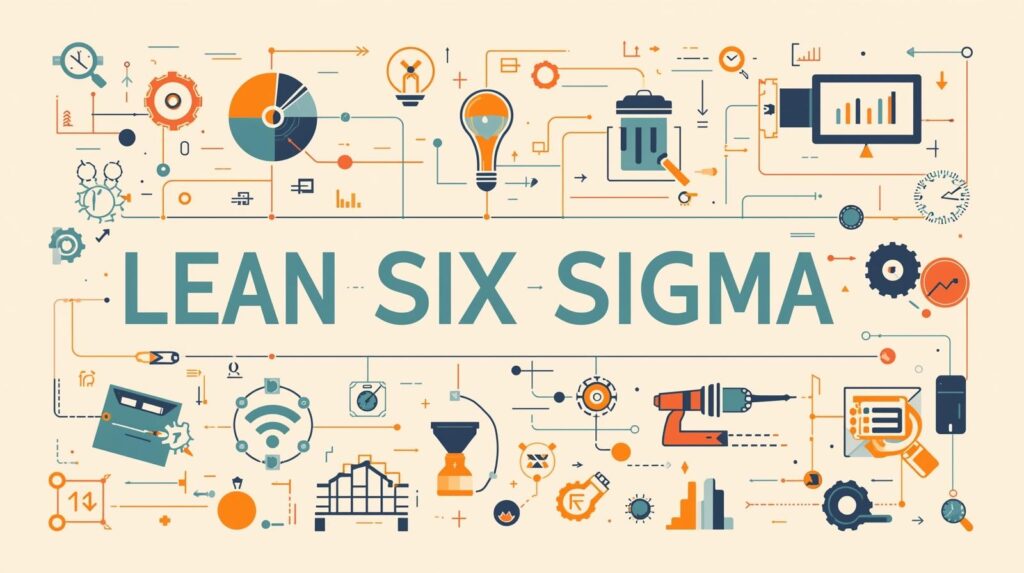
Today’s education is not confined to textbooks, examinations, and rote learning. As learners mature, they find themselves in an environment characterized by perpetual change: technologies emerge annually, job descriptions undergo continual refinement, and there is a growing expectation from employers that individuals will engage in problem-solving rather than merely adhere to directives. This change is gradually steering education away from theoretical learning that is entirely based on theory and toward skill-based learning that equips students for actual circumstances.
In their studies, professional lives, and even routine activities, students are anticipated to think logically, recognize issues, and come up with efficient remedies. This is where practical skills are crucial. A skill that is both practical and easy to understand is Lean Six Sigma. It assists students in cultivating a systematic way of thinking, enhancing processes, and minimizing errors—abilities that are valuable well outside the classroom. Platforms such as SkillsBiz Education aim to provide modern learners with easy access to and understanding of skills that are pertinent to the industry.
What Is Lean Six Sigma?
Lean Six Sigma may sound complex at first, but its idea is actually very simple. It is a method that helps people work smarter, not harder, by improving the way tasks are done.
Lean Six Sigma is made of two ideas:
-
Lean focuses on removing unnecessary steps, saving time, and reducing waste
-
Six Sigma focuses on reducing errors and improving quality
The combination of Lean and Six Sigma aids individuals in enhancing processes, ensuring these become speedier, cleaner, and more precise. Rather than relying on guesses for solutions, it promotes a careful examination of problems by learners and advocates for gradual improvements.
Why Lean Six Sigma Is Easy to Understand for Beginners
A lot of learners think that Lean Six Sigma is meant only for engineers or big corporations, but this is not the case. Essentially, it revolves around clear thinking and common sense. The concepts are organized and make sense, so even students and beginners can grasp them easily.
To begin with Lean Six Sigma, you don’t need advanced math skills or technical expertise. Rather, it instructs students in the art of problem observation, appropriate questioning, and logical enhancement of outcomes. This makes it perfect for learners who appreciate clarity, organization, and problem-solving. SkillsBiz Education and similar educational platforms decompose these concepts into straightforward ideas that students can connect with their daily experiences.
The Core Idea Behind Lean Six Sigma
The main goal of Lean Six Sigma is to create better results by improving how work is done. It focuses on a few powerful ideas that apply to almost every area of life.
Some of the core ideas include:
-
Reducing waste, such as unnecessary steps or repeated work
-
Improving quality by reducing errors and confusion
-
Creating better outcomes with fewer resources
-
Focusing on continuous improvement instead of quick fixes
These concepts can also be applied outside of business settings. Students can utilize them in areas such as education, time management, group assignments, and even their everyday habits. SkillsBiz Education highlights this adaptability by demonstrating to learners the seamless integration of Lean Six Sigma thinking into their academic and professional lives.
How Lean Six Sigma Helps Learners Think Differently
A major advantage of Lean Six Sigma is its ability to transform learners’ thought processes. Learners are trained to understand problems deeply, rather than memorizing information. They learn to pose inquiries such as “Why is this happening?” and “What can be improved?”
This method promotes logical reasoning, analysis, and organized approaches to problem-solving. Students cease emotional reactions to issues and begin to tackle them with composure and methodically. With time, this fosters assurance and lucidity.
Lean Six Sigma as a Problem-Solving Skill
Lean Six Sigma is not just a theory—it is a practical problem-solving skill. Learners are guided to follow clear steps when solving problems instead of jumping to conclusions.
The approach helps learners:
-
Identify the real problem instead of surface issues
-
Understand the root cause of mistakes or delays
-
Apply simple solutions that improve results
-
Measure improvement and adjust when needed
This step-by-step thinking is extremely useful in academic projects, internships, and workplace tasks. With guidance from learning platforms like SkillsBiz Education, learners can practice this approach in real scenarios.

Real-World Examples Learners Can Relate To
When applied to everyday situations, Lean Six Sigma becomes even more comprehensible. A learner who finds it difficult to prepare for exams right before they occur can apply Lean thinking to spot time that is not being used efficiently and enhance their study habits. In the same way, adopting a Six Sigma approach can lead to fewer mistakes in tasks by enhancing checking and revising practices.
Students can apply Lean Six Sigma concepts in group projects to enhance coordination, minimize confusion, and boost task efficiency. Although these minor enhancements might appear straightforward, they cumulatively foster robust smart-working habits—an approach actively endorsed by SkillsBiz Education through hands-on learning.
Why Lean Six Sigma Is Valuable for Career Growth
In today’s competitive job market, employers look for candidates who can improve systems and solve problems, not just follow instructions. Lean Six Sigma skills show employers that a learner understands efficiency, quality, and improvement.
Professionals with Lean Six Sigma knowledge often stand out because they:
-
Think logically under pressure
-
Reduce mistakes and improve outcomes
-
Help teams work more efficiently
-
Contribute to long-term organizational growth
Lean Six Sigma Across Different Fields
Lean Six Sigma is a universal skill that applies across industries. It is not limited to one profession or sector. Learners from different backgrounds can benefit from it.
It is widely used in:
-
Business and management
-
Healthcare and hospitals
-
Education and training
-
IT and technology services
-
Operations and service industries
Because of this wide applicability, SkillsBiz Education positions Lean Six Sigma as a foundational skill that supports long-term career flexibility.

Building Confidence Through Structured Thinking
When learners are aware of the steps to take, their confidence increases. Lean Six Sigma offers a transparent framework that eliminates uncertainty and doubt. Learners gain confidence when they can analyze situations logically and make informed decisions.
This organized way of thinking alleviates stress, enhances decision-making, and aids learners in articulating their ideas clearly. With time, this self-assurance evolves into a considerable asset for one’s career and personal life.
Learning Lean Six Sigma Through Skill-Based Education
Modern learners benefit the most when skills are taught practically rather than theoretically. Skill-based education platforms help learners understand concepts, apply them, and reflect on outcomes.
SkillsBiz Education supports Lean Six Sigma learning by focusing on clarity, real-world examples, and beginner-friendly explanations. This approach ensures learners not only understand the concept but also know how to use it effectively.
Common Myths About Lean Six Sigma
Due to widespread misconceptions, numerous learners are reluctant to embark on Lean Six Sigma. Certain individuals consider it overly technical, whereas others regard it as exclusively for major corporations. In practice, Lean Six Sigma is adaptable and easy to access.
Beginners can easily begin to learn and apply it with the correct guidance and a simplified approach to learning. Platforms such as SkillsBiz Education dispel these myths by offering a straightforward and practical presentation of the subject.

How Learners Can Start Learning Lean Six Sigma
Learners can begin their Lean Six Sigma journey step by step. They should focus on understanding basic concepts first and then practice applying them in simple situations.
A good starting approach includes:
-
Learning core concepts in simple language
-
Observing daily problems and inefficiencies
-
Practicing structured problem-solving
-
Applying learning to small projects
The Long-Term Benefits of Learning Lean Six Sigma
Lean Six Sigma is not a skill that is developed in the short term. It fosters long-term development by establishing habits of ongoing enhancement. Those who cultivate this ability become adaptable, self-assured, and assets in evolving fields.
It enhances career stability, leadership potential, and decision-making ability over time. This renders Lean Six Sigma a wise investment for a learner’s future.
Lean Six Sigma transcends a mere professional certification; it embodies a mindset. It instructs students on enhancing systems, minimizing mistakes, and working effectively. This methodical approach provides learners with a significant edge in a world that prizes practical skills and adaptability.
Learning Lean Six Sigma is straightforward, practical, and relevant with user-friendly platforms such as SkillsBiz Education. Today’s learners can truly be said to possess a skill that is future-ready and smart.
FAQs
What is Lean Six Sigma in simple terms?
Lean Six Sigma is a method that helps people improve processes by reducing waste and mistakes while working smarter.
Is Lean Six Sigma suitable for beginners and students?
Yes, it is suitable for beginners because it focuses on logical thinking and simple problem-solving rather than technical knowledge.
Do learners need a technical background to learn Lean Six Sigma?
No, learners from any background can learn Lean Six Sigma with the right guidance and examples.
How does Lean Six Sigma help in real-world problem-solving?
It provides a clear step-by-step approach to identify problems, find causes, and apply effective solutions.
Which careers benefit from Lean Six Sigma skills?
Careers in business, operations, healthcare, IT, education, and service industries benefit greatly from Lean Six Sigma skills.
How can learners start Lean Six Sigma training?
Learners can start through structured, beginner-friendly learning platforms like SkillsBiz Education that focus on practical application.